12 Oct 2025
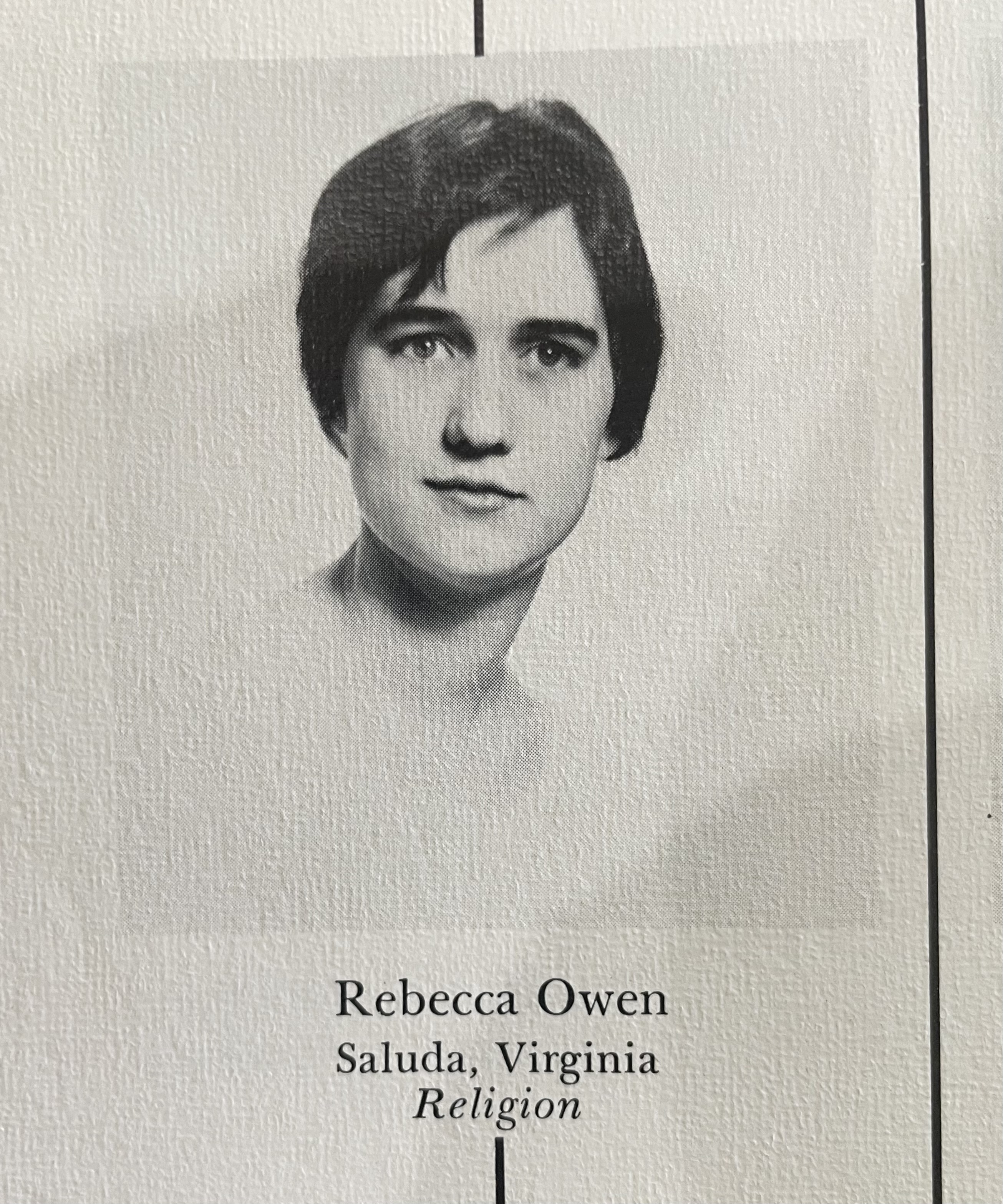
A few months ago, I was asked to preach at First Christian Church in Lynchburg, Virginia. My text was Jeremiah 2. Weaving tales of my grandmother, the Kingdom of Judah, and Lynchburg’s most famous civil rights sit-in, I argued for the importance of telling our love stories, even in hard times. You can listen to a recording of my sermon on YouTube.
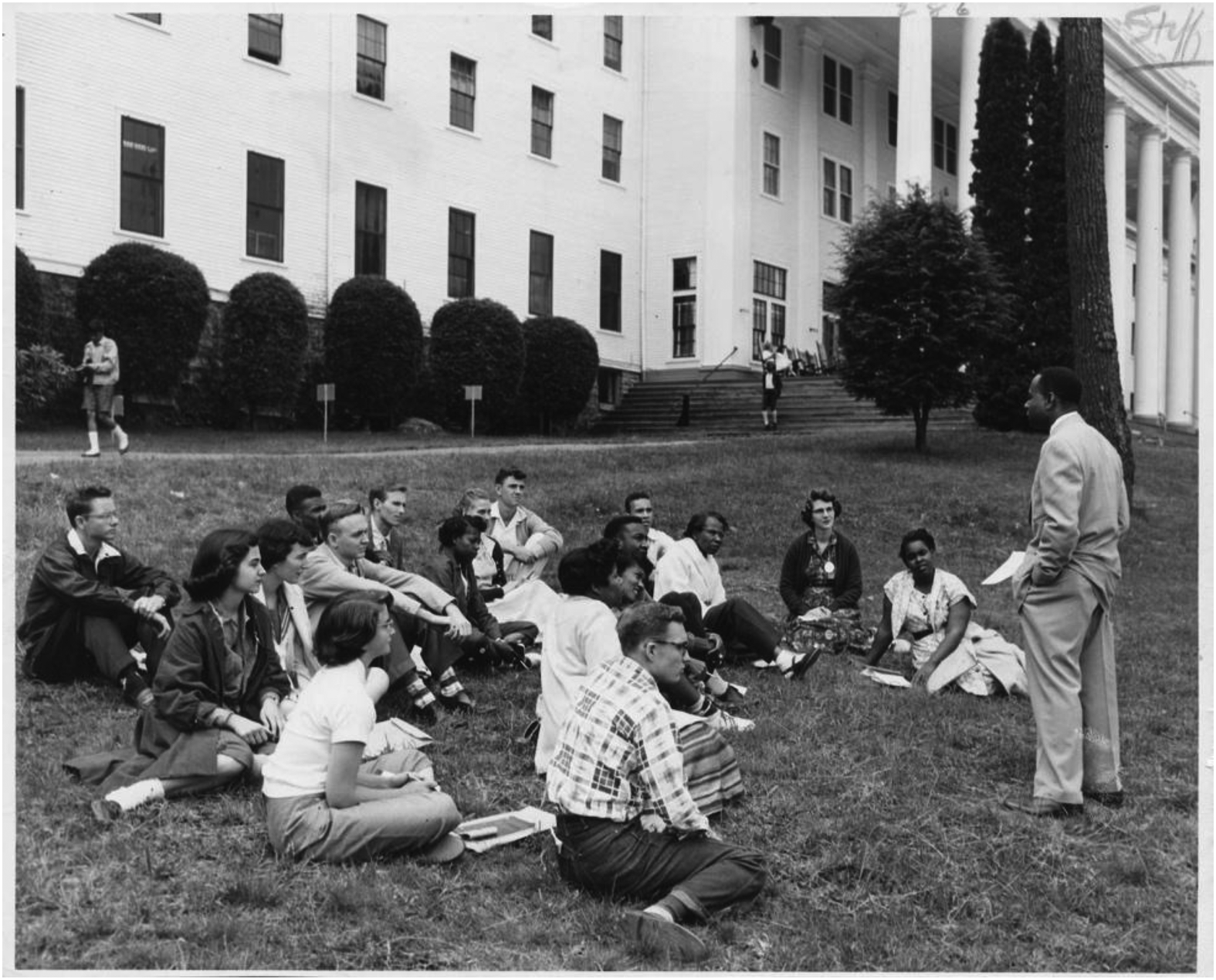
The civil rights portion of my talk grew out of my earlier work preparing a co-lecture for Randolph’s first year experience program, Life More Abundant.
10 Oct 2025
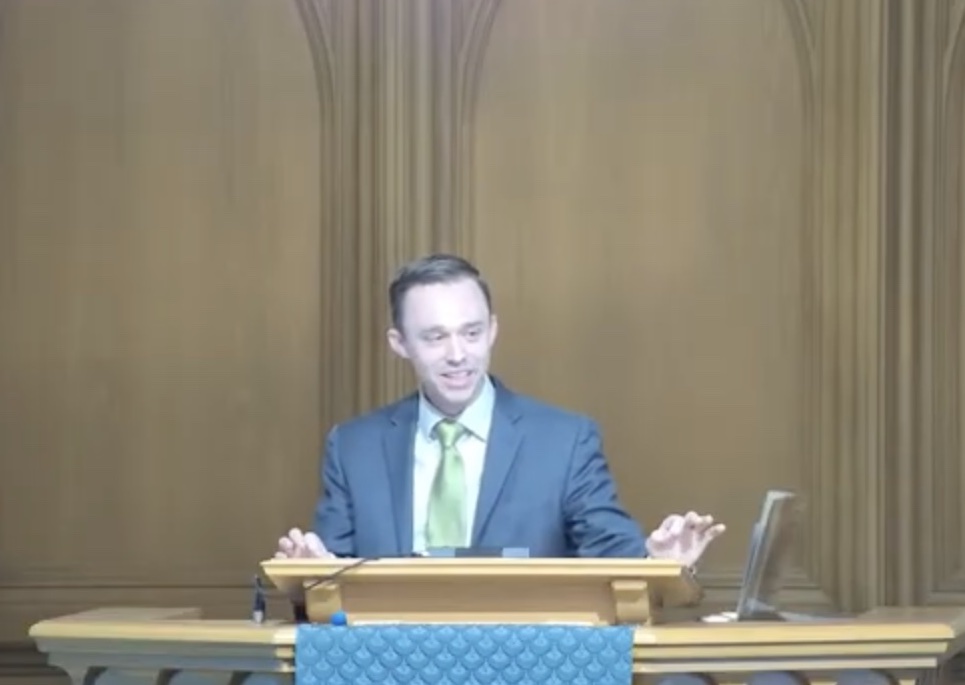
I first heard about Randolph-Macon Woman’s College through a book I read in grad school, Journeys that Opened Up the World by historian Sara Evans. The book is a series of memoirs by sixteen women who were involved in the Student Christian Movement who later became activists in the civil rights movement, anti-war campaign, and the feminist movement. I found the book personally meaningful because several activists had been part of the United Methodist Church’s young adult service program – the same program that I joined after college (and where I met my spouse). One of the memoirs was written by Rebecca Owen, one of the leaders of the civil rights movement in Lynchburg and a student at Randolph-Macon Woman’s College. I paid special attention to Becky’s memoir in particular because she, like me, had grown up Methodist, became a leader in the denomination, and saw her activism as an outgrowth of her faith.
When I first applied for a job at Randolph, I decided to do my teaching demonstration on the sit-in movement. Though I didn’t talk about Becky Owen or the other members of the Patterson Six, I did reference their story at the end of my demonstration – in part to help make my point that the Civil Rights Movement was a grassroots movement.
After arriving at Randolph, I have continued to be fascinated by Becky’s story, assigning her memoir in my American Women’s History course and searching out any other material I can find on her.
This summer, I finally had the opportunity to sort through some of that research and put together a talk before Randolph’s first-year class (the largest in the college’s 130+ year history). The lecture was a co-lecture with my esteemed colleague, Dr. Amy Cohen of Classics and Theatre, where we wove Becky’s story with that of Antigone, the Greek play for this year.
The lecture went off really well. Though collaboratively creating anything can be more difficult, it can also be more fun – and I think our final product was both creative and compelling.
One story that I discovered while doing the research is that Becky attended a Student Christian Movement conference in the fall of 1960, right before the start of her senior year. She met Black activists who had pioneered the sit-in movement such as Rev. James Lawson, the young minister who taught John Lewis and others how to get in “good trouble.” “The imperative of the Denver conference was unambiguous,” Becky recalled in her memoir. “If you, Becky Owen, are serious about Christianity and injustice, get the hell back to Lynchburg and do something.” Upon returning to R-MWC, Becky reached out to Rev. Virgil Wood, pastor of Diamond Hill Baptist, and with the help of the YWCA they began organizing discussion groups that brought together college students and Black community leaders. A couple months later, six college students who’d been involved in the discussion groups headed to Patterson’s Drug Store in downtown Lynchburg…
If you want to hear the rest of the story, I gave a version of this talk the following Sunday at First Christian Church.
15 May 2025
This year, I was honored to be selected for the Quillian International Scholar Study Abroad Seminar in Sri Lanka.
Last year, Randolph hosted Sri Lankan scholar Sudesh Mantillake as our Quillian Visiting International Scholar. I was fortunate to get to know Dr. Mantillake over the course of the year – his office was just down the hall from mine—and I was especially impressed by his performance of Kandyan dance in February, an event attended by the Sri Lankan ambassador.
Throughout the spring, the Randolph delegation followed a rigorous preparation schedule. We attended weekly information sessions on Sri Lankan history, religion, culture, and food, and many of us visited the Sri Lankan Embassy in D.C.
I also used this time to begin researching historical connections between the U.S. and Sri Lanka.
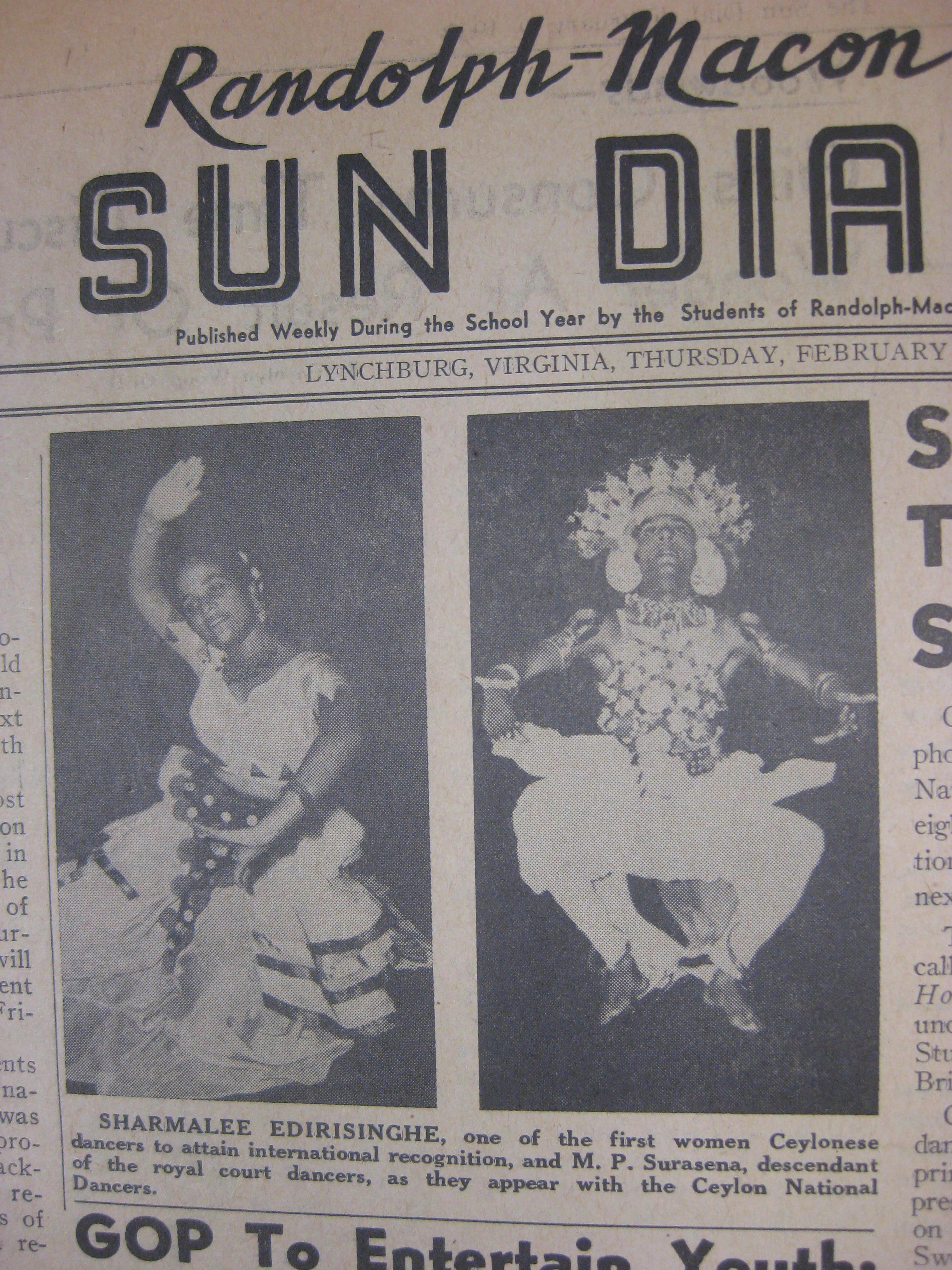
The first thing I discovered was that Sudesh was not the first Sri Lankan to perform Kandyan dance at Randolph! The R-MWC newspaper, The Sun Dial, reported that two members of the Ceylon National Dancers performed here in 1962. When I showed the image to Sudesh, he was blown away—the male dancer had been one of his mentors!
That discovery led me to wonder: Had Sri Lanka played a role in American religious history?
I started by thinking about the 1932 Hocking Report, titled Re-Thinking Missions: A Laymen’s Inquiry After One Hundred Years. I had first encountered it in David Hollinger’s Protestants Abroad, which highlights its pivotal role in reshaping Protestant missions and American Protestantism more broadly.
As a former Global Mission Fellow of the United Methodist Church—here’s my blog and podcast from those years—Hollinger’s arguments made total sense to me. It helped explain why I had such as radically different understanding of “mission” and a “missionary” than did evangelical Christians. In part, it’s because my tradition had been so influenced by the Hocking Report.
I discovered that the Laymen’s committee did indeed travel to Ceylon as part of their research. However, I wasn’t able to find any digitized sources detailing their time there. Ah the joys and challenges of doing social history…
A bit more internet digging led me to Howard Thurman as another possible link between American religious history and Sri Lanka.
I had read Thurman’s Jesus and the Disinherited in grad school and knew how deeply it had been shaped by his 1935 journey to India. During that trip, he met with Gandhi and helped forge a spiritual and intellectual link between Gandhian nonviolence and the American civil rights movement.
I also knew that his papers had been digitized through Boston University’s Howard Thurman Papers Project.
What I quickly discovered was that Thurman didn’t just travel to India—he also spent time in Ceylon (Sri Lanka) and Burma (Myanmar).
As I dug into his journal from his time in Ceylon, I began to see that Sri Lanka played a far more crucial role in shaping his ideas than I had realized.
I presented a paper on this research titled “Transformative Travel: Howard Thurman’s Pilgrimage to Ceylon and the Making of the U.S. Civil Rights Movement.”
Since I don’t anticipate publishing this research formally, I’m sharing the presentation text here.
18 Mar 2025
This spring, I headed to New Orleans to present a paper, “Forgotten Frequencies: Network Religious Radio and the Rise of Tri-Faith America.” The paper focused especially on NBC’s The Catholic Hour in the 1930s. The popular program emerged during an era rife with nativism and Protestant nationalism, and it powerfully demonstrated that Catholics could be both fully American and fully Catholic. Yet, to package Catholicism for a mass audience, Catholic organizers had to make strategic compromises that maintained Catholicism’s distinctiveness but didn’t offend non-Catholic listeners. This balancing act, I argued, helped pave the way for for Americans during and after World War II to see Protestants, Catholics, and Jews as co-equal pillars of American religious life.
Here’s a short Randolph News article about my paper: Kenaston Presents at Southeastern American Studies Association Conference.
16 Feb 2025
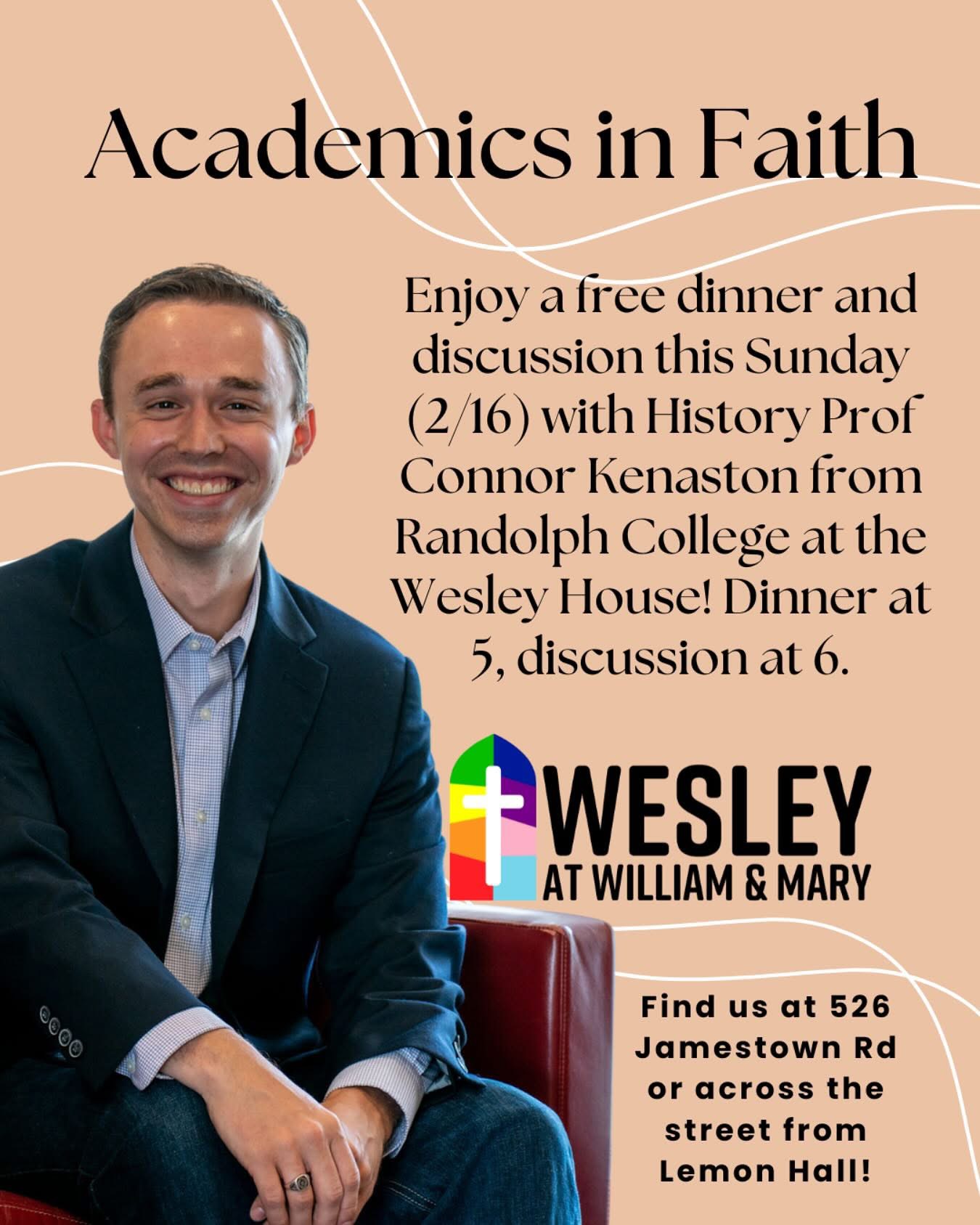
I was recently invited to give a talk about Methodist history and racial justice to the William and Mary Wesley Foundation. While the first half focused on standard denominational history, the second half I focused in on lessons we can draw from the Student Christian Movement, using my Modern American History article. Overall, the experience was a lot of fun, and I’m thankful to Rev. Ryan LaRock for inviting me!
13 Dec 2024
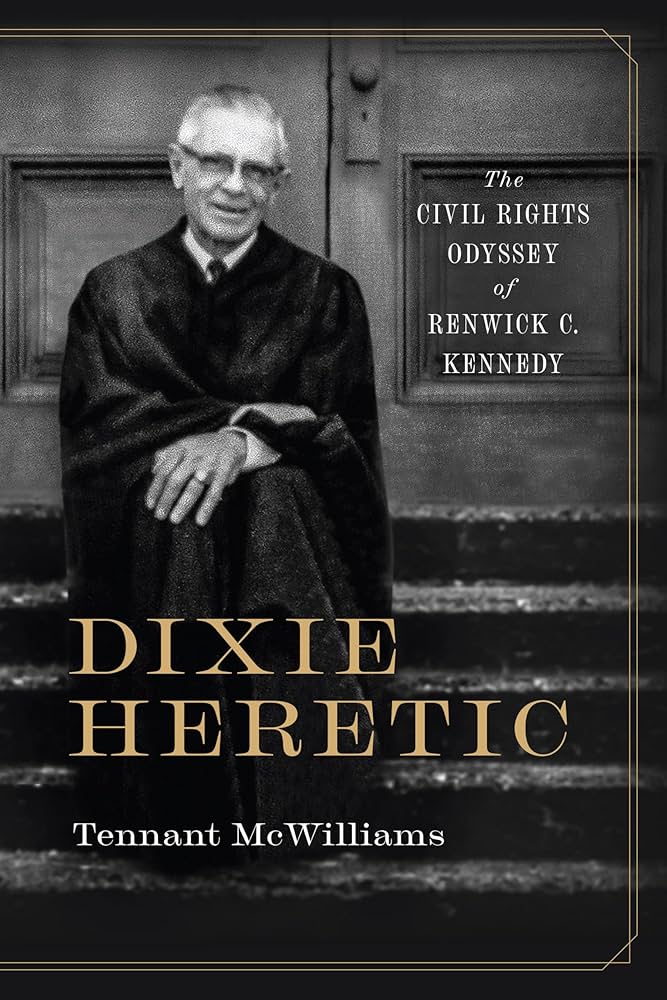
My review of Dixie Heretic: The Civil Rights Odyssey of Renwick C. Kennedy by the late Tennant McWilliams is in the December 2024 issue of the Journal of American History! The book is a deeply researched biography of white Southern minister Renwick Kennedy and his (often unsuccessful) efforts to change his fellow white Christians’ attitudes about race and poverty.
You can read my review here.
21 Mar 2024
A few years back, I spent a few days at the University of Akron library digging into the Advertising Files of the Goodyear Tire & Rubber Company. I wanted to learn more about “Greatest Story Ever Told,” a religious radio program from the late 1940s and early 1950s that was later made into a TV program and a biblical epic. When Greatest Story emerged in 1947, it differed from all other religious radio programs at that time because it was sponsored by a commercial company.
As I was looking through Goodyear’s records, I came across several speeches and letters where Goodyear officials explained why they thought sponsoring a religious radio program was a good idea for their business. I was struck by how Goodyear used the tools of the advertising industry (eg, case studies, surveys, ratings, etc) along with an interfaith religious advisory committee (kind of like this one from the Coen brothers’Hail Caesar!) to tell the story of the Christian New Testament in a way that appealed to the mass market. As I was looking through the archive, I remember thinking, “Wow! I don’t know how to make sense of this yet, but this is really interesting!” Not long after that archive visit, however, I realized I needed to wrap up my dissertation prior to the start of WWII. So I set my findings on Goodyear and The Greatest Story aside.
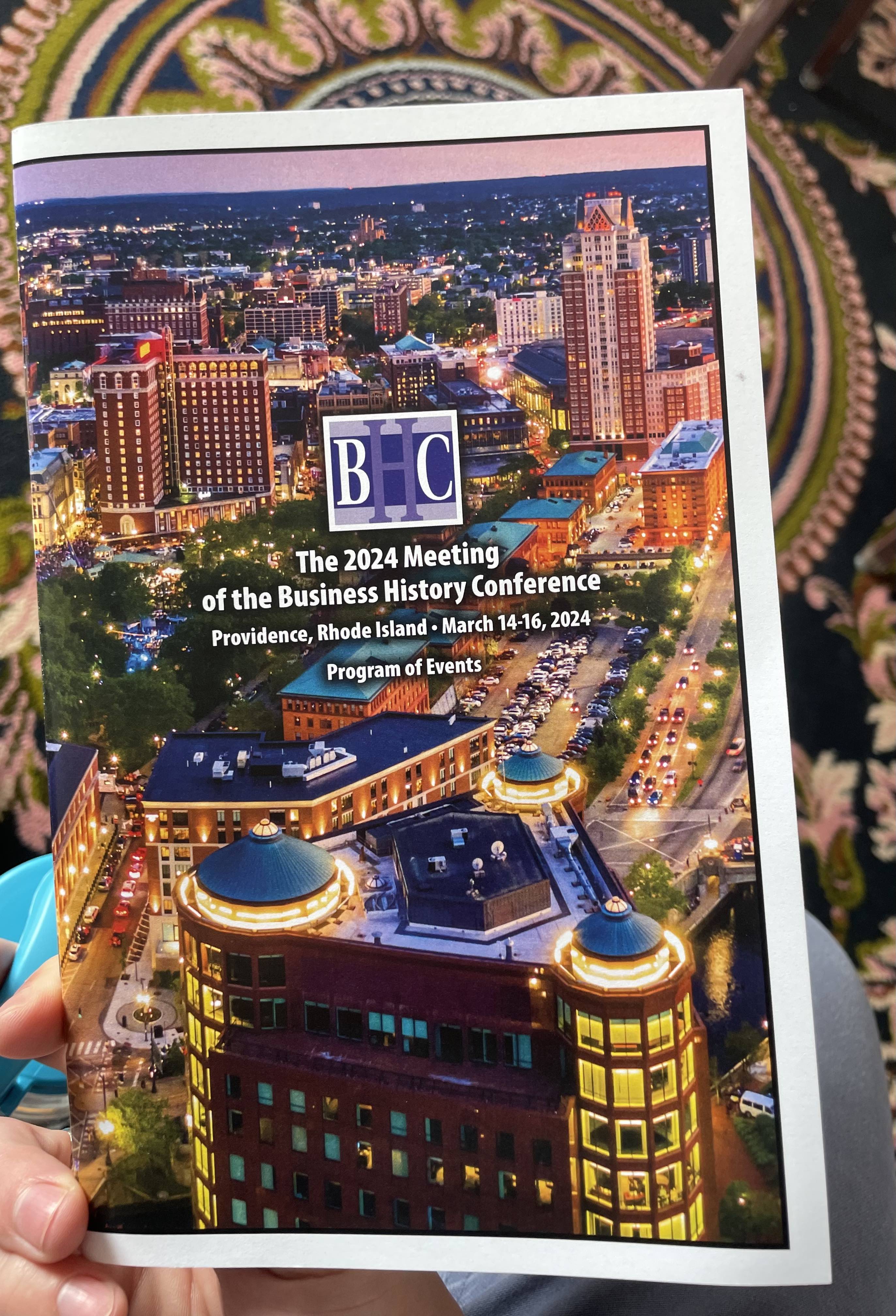
I decided to return to those materials this fall, however. I wanted to test the waters to see if I wanted to stretch the timeline of The Big Three into the 1940s. I co-pitched a panel called “The Business of National Patrimony” to be presented at the Business History Conference in Providence, RI. My wonderful co-presenters were Dael Norwood and Whitney Martinko, and we were lucky to have Wendy Woloson as our commeter and Seth Rockman as our panel chair. Shout-out to Dael for doing most of the legwork in regards to getting the panel together!
My paper, “The Greatest Story: Commercial Radio and Religion in the American Century,” argued that Greatest Story Ever Told helped facilitate the rise of an imagined liberal consensus on religion during the Cold Year. At the same time, I also showed how the program’s well-publicizied innovative sponsorship model helped convince the FCC that commercial program could serve the public interest, leading to a foundational 1960 FCC ruling that enabled the rise of televangelism. I received some excellent feedback from both Dr. Woloson and from the audience that will help me revise.
This was my first time attending the Business History Conference, and I really enjoyed it. Special thanks to Randolph College’s Professional Development Committee for supporting my trip to Providence!
15 Nov 2022
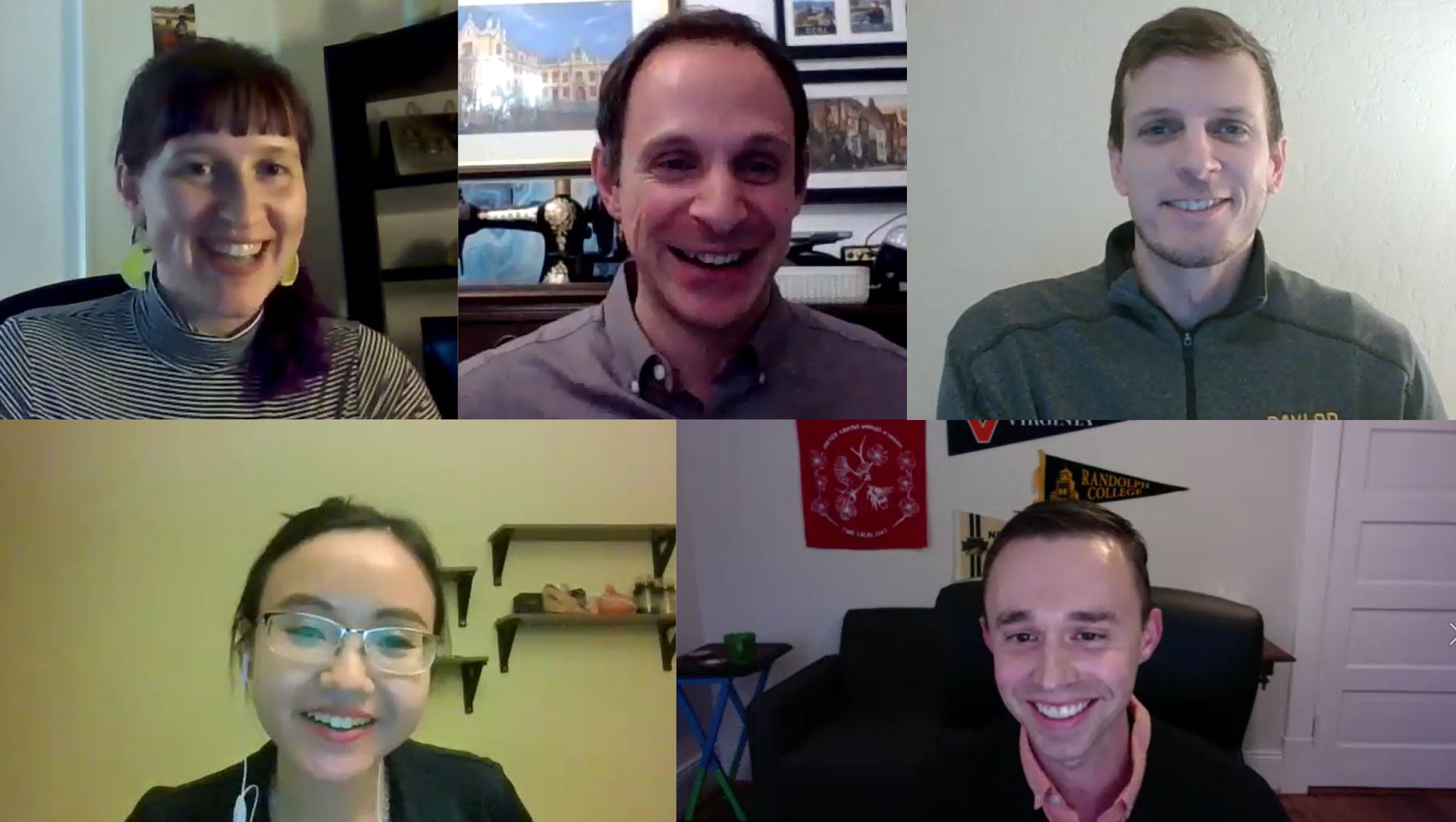
In 2020, I was chosen to receive a $2,500 Research Fellowship grant from the Presbyterian Historical Society. Unfortunately, the Covid-19 pandemic delayed my trip to the archive. Thankfully, I was able to use my research funds to request digital scans that were essential for writing my dissertation. I completed my long-anticipated trip to the archive in January 2022.
This past week, I participated in a panel discussion with other grant recipients to talk about my research and the impact of the PHS fellowship. You can read an article about the event or watch a recording of the event. Perhaps most importantly, be sure to support the Presbyterian Historical Society and other libraries and archives this Giving Tuesday!
08 Apr 2022
My article, “Step by Step: American Interracialism and the Origins of Talk-First Activism” has just been published in Modern American History!
Why are diversity trainings, dialogues, & social justice book clubs often proposed as first steps to creating an equitable society? “Step by Step” suggests that the answer lies in the history of an idea I call “talk-first activism.”
TLDR; in the first half of 20th century, a nationwide movement tries to fight prejudice by facilitating talk across the color line. In the 1940s-1950s, Black staffers in predominantly white Protestant organizations transform that movement through their insistence that talk must lead to action. Cue unintended consequences…
Because “Step by Step” was published by Modern American History as an open access article, you can read the article without a paid subscription! I’d be happy to discuss Step by Step with your classroom or organization.
Thanks to Sarah Phillips and the MAH team for their excellent editorial assistance, as well as to the anonymous reviewers for their helpful critiques. Special thanks to Monica Blair, Allison Kelley, Gillet Rosenblith, and, most of all, Grace Hale for their generous and insightful feedback. And shoutout to the Smith College Library, the University of Minnesota Library, and the University of Virginia’s department of history for their generous financial support of this project!