Talking Sit-Ins With Life More Abundant
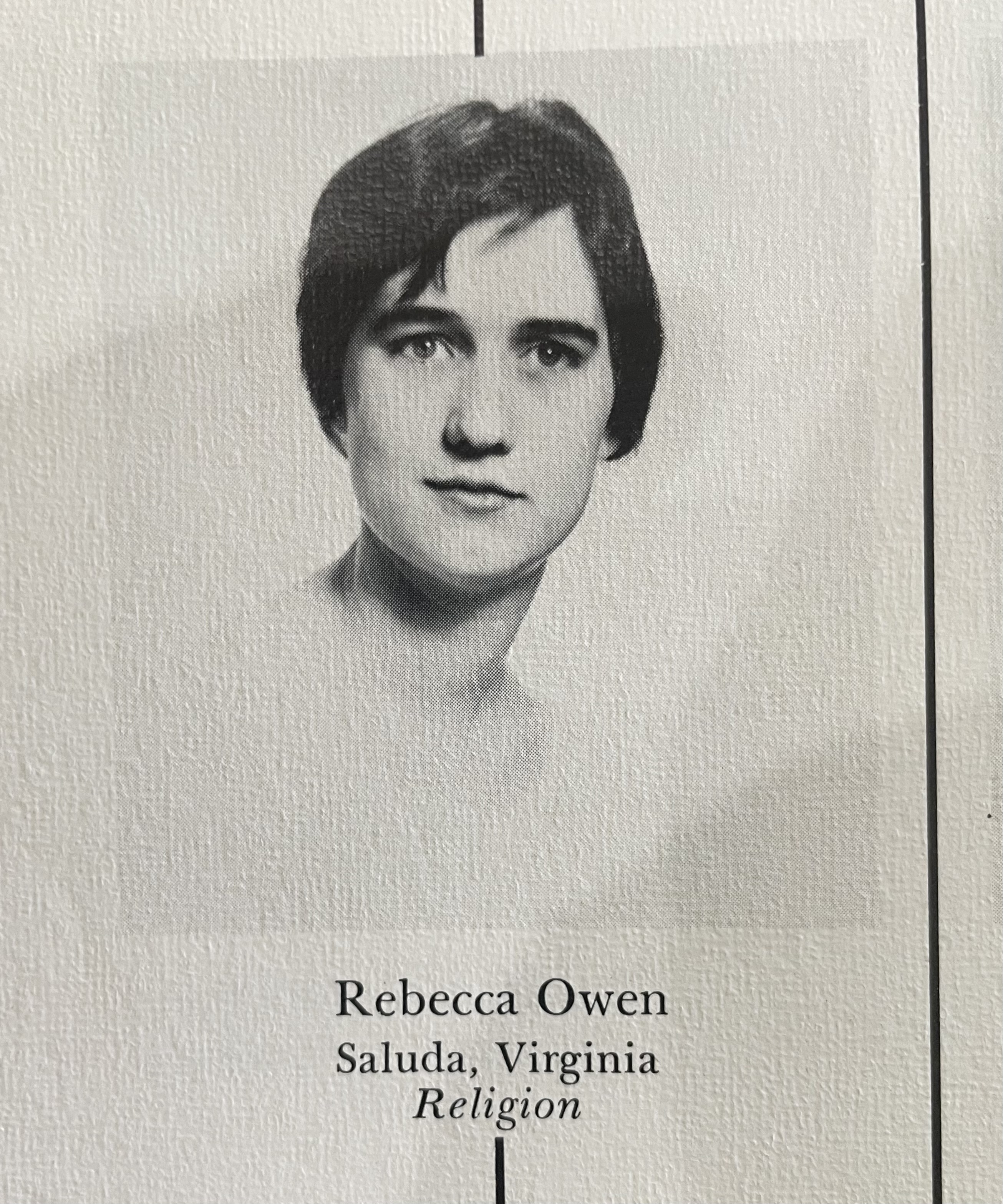
10 Oct 2025I first heard about Randolph-Macon Woman’s College through a book I read in grad school, Journeys that Opened Up the World by historian Sara Evans. The book is a series of memoirs by sixteen women who were involved in the Student Christian Movement who later became activists in the civil rights movement, anti-war campaign, and the feminist movement. I found the book personally meaningful because several activists had been part of the United Methodist Church’s young adult service program – the same program that I joined after college (and where I met my spouse). One of the memoirs was written by Rebecca Owen, one of the leaders of the civil rights movement in Lynchburg and a student at Randolph-Macon Woman’s College. I paid special attention to Becky’s memoir in particular because she, like me, had grown up Methodist, became a leader in the denomination, and saw her activism as an outgrowth of her faith.
When I first applied for a job at Randolph, I decided to do my teaching demonstration on the sit-in movement. Though I didn’t talk about Becky Owen or the other members of the Patterson Six, I did reference their story at the end of my demonstration – in part to help make my point that the Civil Rights Movement was a grassroots movement.
After arriving at Randolph, I have continued to be fascinated by Becky’s story, assigning her memoir in my American Women’s History course and searching out any other material I can find on her.
This summer, I finally had the opportunity to sort through some of that research and put together a talk before Randolph’s first-year class (the largest in the college’s 130+ year history). The lecture was a co-lecture with my esteemed colleague, Dr. Amy Cohen of Classics and Theatre, where we wove Becky’s story with that of Antigone, the Greek play for this year.
The lecture went off really well. Though collaboratively creating anything can be more difficult, it can also be more fun – and I think our final product was both creative and compelling.
One story that I discovered while doing the research is that Becky attended a Student Christian Movement conference in the fall of 1960, right before the start of her senior year. She met Black activists who had pioneered the sit-in movement such as Rev. James Lawson, the young minister who taught John Lewis and others how to get in “good trouble.” “The imperative of the Denver conference was unambiguous,” Becky recalled in her memoir. “If you, Becky Owen, are serious about Christianity and injustice, get the hell back to Lynchburg and do something.” Upon returning to R-MWC, Becky reached out to Rev. Virgil Wood, pastor of Diamond Hill Baptist, and with the help of the YWCA they began organizing discussion groups that brought together college students and Black community leaders. A couple months later, six college students who’d been involved in the discussion groups headed to Patterson’s Drug Store in downtown Lynchburg…
If you want to hear the rest of the story, I gave a version of this talk the following Sunday at First Christian Church.