15 May 2026
We have it in our power to begin the world over again.
Thomas Paine, Common Sense, 1776
Though I was trained primarily as a historian of the US, departmental needs mean that I have pushed myself to focus more on Atlantic and transnational history.
This past spring, I decided to teach a course on the Age of Revolutions. While such a course is far outside my temporal and geographic scope, it seemed like a fitting course for the 250th anniversary of the signing of the Declaration of Independence. And of course, it was another great opportunity for me to dig into the Haitian Revolution and listen to Boukman Esperyans!
In preparing to teach the course, I leaned especially on Rafe Blaufarb’s The Revolutionary Atlantic (Oxford, 2017), Ben Marsh and Mike Rapport’s Understanding and Teaching the Age of Revolutions (University of Wisconsin Press, 2017), Nathan Perl-Rosenthal’s The Age of Revolutions (Basic Books, 2024), and Laurent Dubois’s Avengers of the New World (Harvard, 2005).
A few highlights from the course:
- Virtual lecture about Hamilton and “founders chic” by Dr. Shira Lurie, author of The American Liberty Pole: Popular Politics and the Struggle for Democracy in the Early Republic (UVA Press, 2023)
- Two-day interactive role-playing game using John Patrick Coby’s Raising the Eleventh Pillar: The Ratification Debate of 1788 (W.W. Norton & Company, 2021). This was my first time using a “Reacting to the Past” game in class, and students responded really well to it.
- Thayer Lecture with Dr. Jane Kamensky, CEO of Monticello and author of A Revolution in Color: The World of John Singleton Copley (Norton, 2016).
- Class trip to the Virginia Museum of History & Culture, including vault tour and panel with museum employees.
- Graphic history novel by Charles F. Walker, Witness to the Age of Revolution: The Odyssey of Juan Bautista Tupac Amaru (Oxford, 2020). Another first–I’ve personally really enjoyed reading Oxford’s Graphic History series but hadn’t assigned one until this year. It worked well!
- Weekly “think aloud” assignments where students recorded themselves talking about the week’s reading and what it has to do with them. In addition to avoiding AI use, I found the assignment helpful for honing students’ verbal and synthesizing skills
- Research paper assignment. I worked to scaffold this assignment – including two guided library work session. One student paper about loyalists in the American Revolution even won Randolph College’s 2025/26 Best Writing in the Arts & Letters Division!
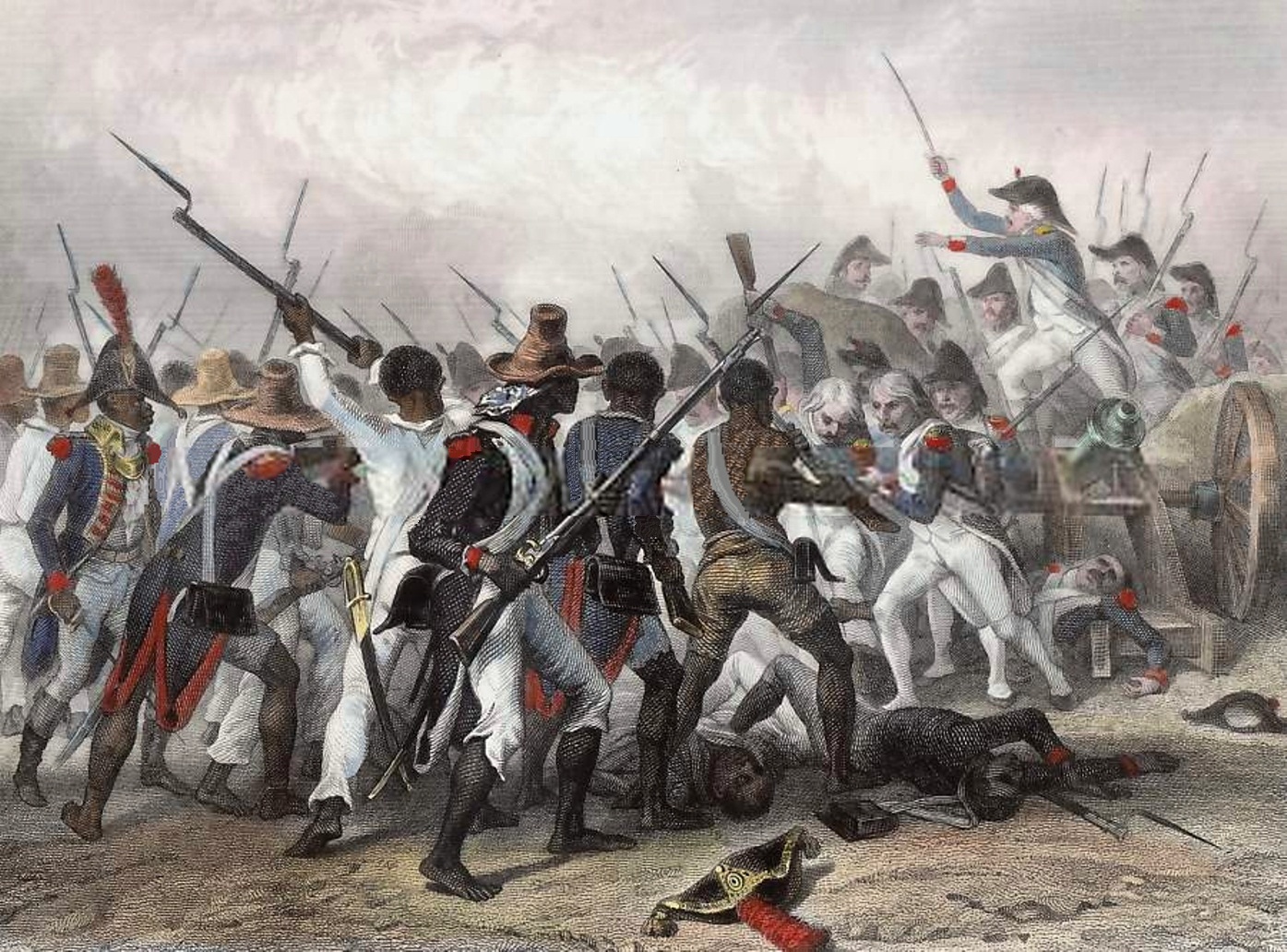
Image below: Attack and take of the Crête-à-Pierrot (1802). Original illustration by Auguste Raffet, engraving by Ernst Hébert. Courtesy of Library of Wikimedia Commons.
10 Feb 2026
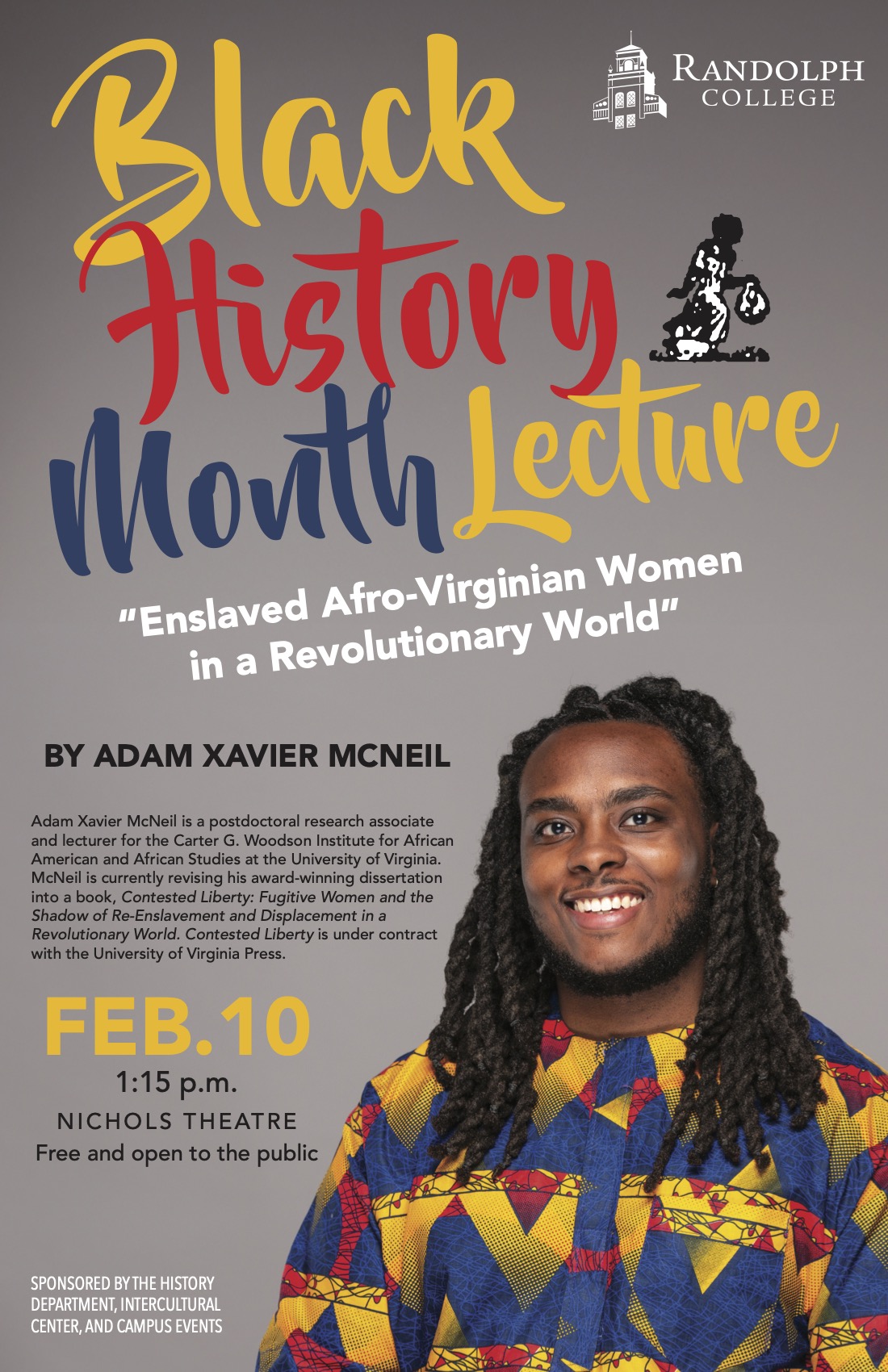
As part of my African American history class, I invited Dr. Adam McNeil to give a public lecture on his work about enslaved Afro-Virginian women during the Revolutionary War. It was a wonderful lecture and an honor to host him at Randolph. Special thanks to support from Randolph’s Campus Events Committee and the Intercultural Center for supporting the event.Here’s my introduction to Dr. McNeil’s talk:
_One hundred years ago – to the day – Americans were in the midst of celebrating the very first Black History Month, or as it was known then, “Negro History Week.” Designed by historian Dr. Carter G. Woodson, Negro History Week was created to help remedy the systematic erasure of Black Americans from American history. Dr. Woodson did not envision Negro History Week as the only time people should learn about Black history. Instead, he imagined it as an opportunity for schools to demonstrate what students had learned all year–it was a call for intentional remembering.
As Woodson envisioned it, Negro History Week was not an exercise in memorization or a box to be checked. He understood that how we remember the past has profound implications for the present. After all, 1926 was the height of Jim Crow segregation. Membership in the Ku Klux Klan was at an all-time high. Lynchings remained prevalent. Nativist and anti-immigrant rhetoric saturated public discourse. In Virginia, the General Assembly was passing racial integrity laws that banned interracial marriage, enforced the so-called “one-drop rule,” and mandated segregation in public spaces.
Dr. Woodson knew what he was doing when he created Negro History Week. He believed that knowing the truth could tear down the walls of segregation, hatred, racism, and white supremacy. “There would be no lynching if it did not start in the schoolroom,” Woodson declared.
Fifty years later, in 1976, Negro History Week evolved into Black History Month. And of course, 1976 was also the bicentennial, the year that Americans celebrated the 200th anniversary of the Declaration of Independence. So at precisely the moment Americans were asking themselves, “What is America? Who is American? And what does “liberty and justice for all” really mean?” At that moment, Woodson’s intellectual descendants were pushing to recommit the nation to remembering Black history.
This collision – of both the intentional remembering of Black history and the nation – is here with us today, too. 2026 is, after all, the 250th anniversary of the Declaration. And we are once again living in a time when the history of the Revolution and the founding era is being debated. Just weeks ago in Philadelphia, the National Park Service removed signage addressing the history of enslaved people held at the President’s House where George Washington lived while serving as the first President of the United States. History is never just about the past.
And so, in this 250th anniversary year of the Declaration of Independence and the 100th anniversary year of Black History Month, we have not just the opportunity but a duty to examine the experiences of Black Americans during the American Revolution. That is what makes today’s conversation so timely—and why I’m so excited to welcome our speaker today, a leading young scholar of African American history and the Revolution.
Adam Xavier McNeil is a Postdoctoral Research Associate and Lecturer in the Carter G. Woodson Institute for African American and African Studies at the University of Virginia. Dr. McNeil is currently revising his award-winning dissertation into a book, Contested Liberty: Fugitive Women and the Shadow of Re-Enslavement and Displacement in a Revolutionary World. Contested Liberty is under contract with the University of Virginia Press.
Please join me in giving a Wildcat Welcome to Dr. Adam McNeil._
15 Nov 2025
This past spring, Admissions asked me to give a “sample class” for an Admitted Student Day. I decided to create a version of historian Cate Denial’s “What Do Historians Do?” exercise. It’s a fun activity for the first day of class because students think it is just a fun game but later realize the activity helped them think critically about narrative, evidence, and the archive. I thought it’d work well in this setting because it’s engaging and students don’t need to know anything about the topic prior to the exercise. The exercise makes clear to students that if they come to Randolph, they won’t just be memorizing – they’ll learn to become critical thinkers.
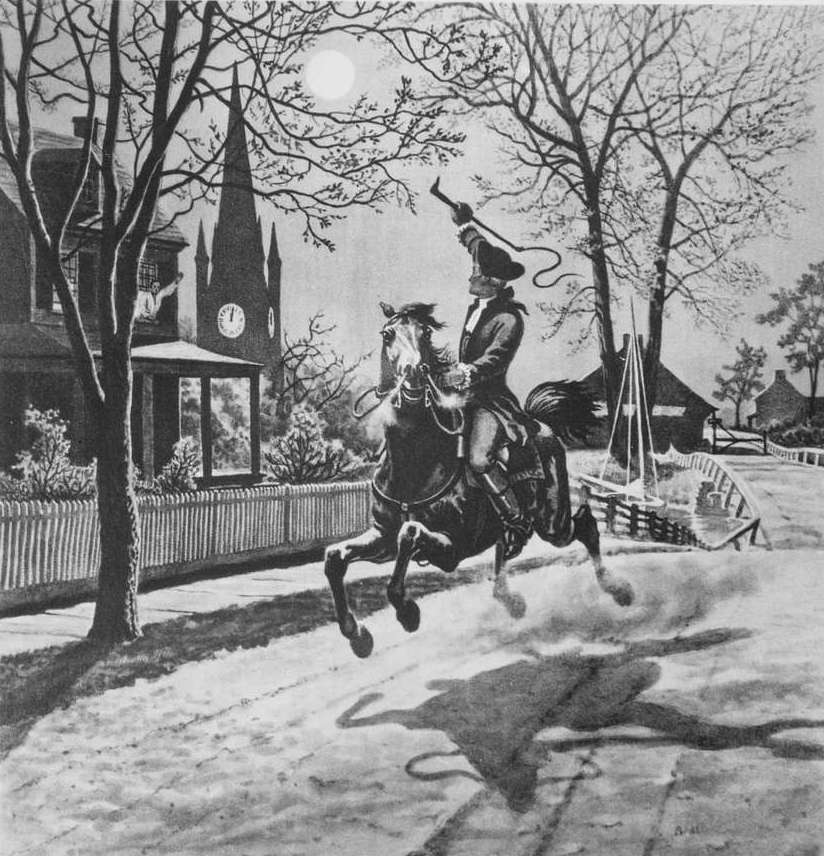
To set up the exercise, I decided to talk a little about the Revolution and how historians have told it in different ways at different times. Ms. Llewellyn, my fifth grade teacher, would be proud to know that I opened my talk with the first two stanzas of Henry Wadsworth Longfellow’s “Paul Revere’s Ride” – all from memory! After making fun of myself for clearly going to school in the 1900s, I have them do a little math to calculate that this is the 250th anniversary of “the eighteenth of April in (seventeen) seventy-five”.
I give them a heads up that they’re going to hear a lot about the American Revolution over the course of the next year. But I insist that telling the story isn’t just a matter of regurgitating facts. We have to tell the story; and in doing so, we’re making choices (whether we realize it or not) about what stories to include and how to frame them. How you tell the story of the Revolution shapes the contemporary lessons people draw from it. Is the Revolution about the evil of taxation… or about the necessity of overthrowing autocratic rulers? Well, it depends on how you tell the story. How we tell the nation’s origin story shapes how we think about our country in this moment.
I then pivot back to Longfellow’s poem. Like most people, I learned the poem in the Revolutionary War unit of my elementary history class. But that wasn’t when it was written. As I have since learned, the poem was published on the eve of the Civil War as Southerners had begun to secede from the union in order to preserve the institution of slavery. Longfellow was an ardent abolitionist. In other words, I’ve come to realize that the famous poem wasn’t just about Paul Revere. It was a powerful call to arms for the Union:
A cry of defiance and not of fear…
In the hour of darkness and peril and need,
The people will waken and listen to hear
The hurrying hoof-beats of that steed,
And the midnight message of Paul Revere.
The story of the Revolution isn’t just about the past; it has ramifications for us in this moment. I tell the students that unlike Henry Wadsworth Longfellow (who played fast and loose with some facts), historians use evidence to tell us what happened… cue transition to analyzing a set of Revolutionary-era political cartoons and coming up with the narrative they elicit!