18 Mar 2025
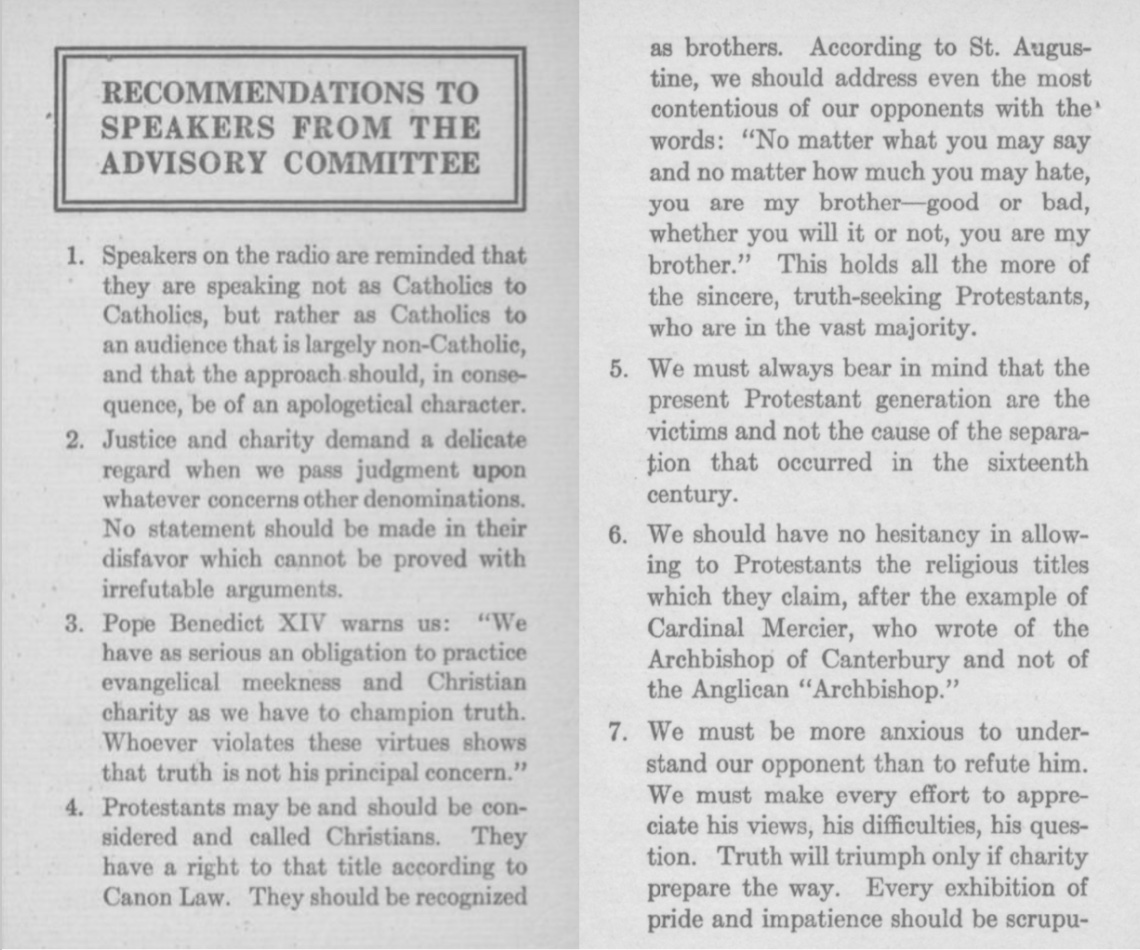
This spring, I headed to New Orleans to present a paper, “Forgotten Frequencies: Network Religious Radio and the Rise of Tri-Faith America.” The paper focused especially on NBC’s The Catholic Hour in the 1930s. The popular program emerged during an era rife with nativism and Protestant nationalism, and it powerfully demonstrated that Catholics could be both fully American and fully Catholic. Yet, to package Catholicism for a mass audience, Catholic organizers had to make strategic compromises that maintained Catholicism’s distinctiveness but didn’t offend non-Catholic listeners. This balancing act, I argued, helped pave the way for for Americans during and after World War II to see Protestants, Catholics, and Jews as co-equal pillars of American religious life.
Here’s a short Randolph News article about my paper: Kenaston Presents at Southeastern American Studies Association Conference.
21 Mar 2024
A few years back, I spent a few days at the University of Akron library digging into the Advertising Files of the Goodyear Tire & Rubber Company. I wanted to learn more about “Greatest Story Ever Told,” a religious radio program from the late 1940s and early 1950s that was later made into a TV program and a biblical epic. When Greatest Story emerged in 1947, it differed from all other religious radio programs at that time because it was sponsored by a commercial company.
As I was looking through Goodyear’s records, I came across several speeches and letters where Goodyear officials explained why they thought sponsoring a religious radio program was a good idea for their business. I was struck by how Goodyear used the tools of the advertising industry (eg, case studies, surveys, ratings, etc) along with an interfaith religious advisory committee (kind of like this one from the Coen brothers’Hail Caesar!) to tell the story of the Christian New Testament in a way that appealed to the mass market. As I was looking through the archive, I remember thinking, “Wow! I don’t know how to make sense of this yet, but this is really interesting!” Not long after that archive visit, however, I realized I needed to wrap up my dissertation prior to the start of WWII. So I set my findings on Goodyear and The Greatest Story aside.
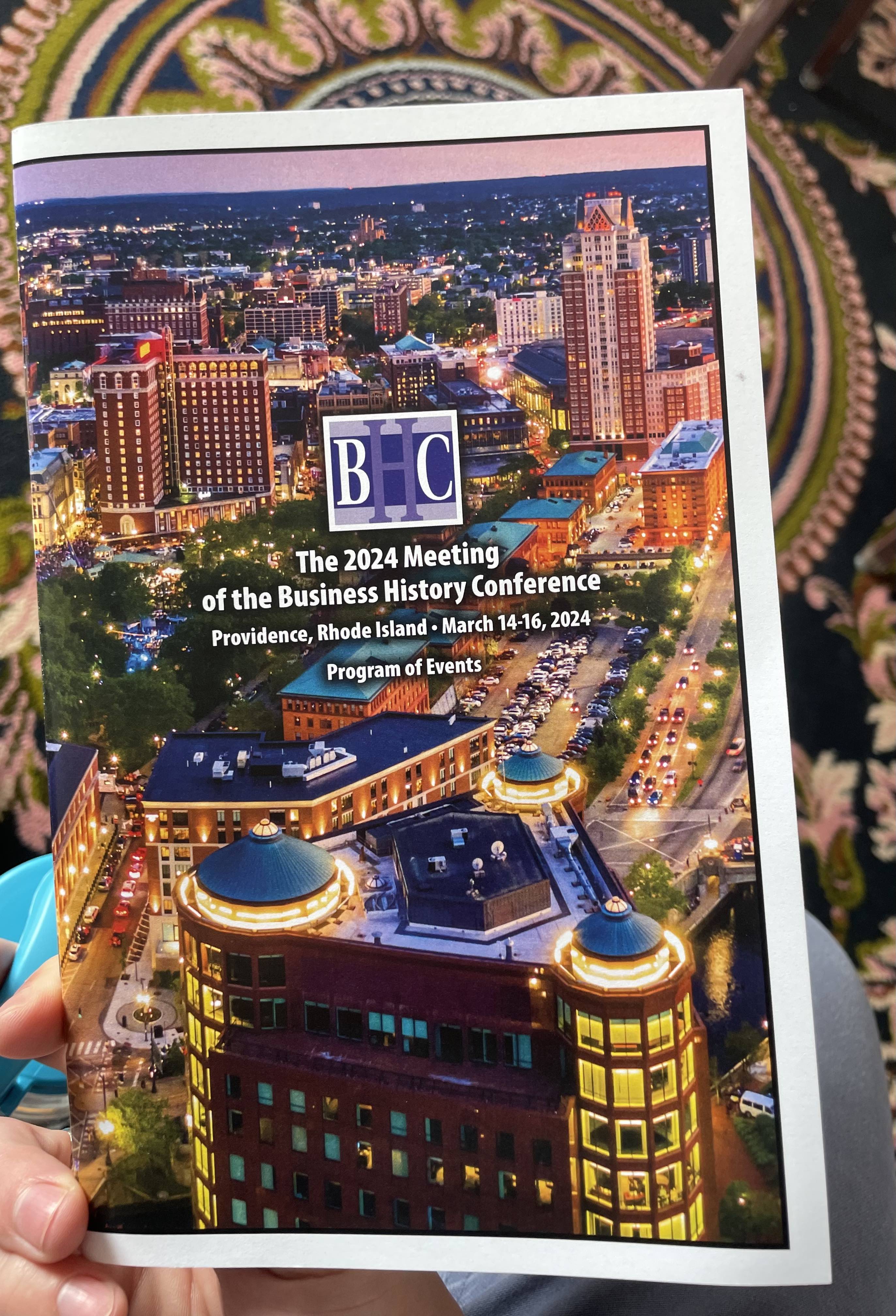
I decided to return to those materials this fall, however. I wanted to test the waters to see if I wanted to stretch the timeline of The Big Three into the 1940s. I co-pitched a panel called “The Business of National Patrimony” to be presented at the Business History Conference in Providence, RI. My wonderful co-presenters were Dael Norwood and Whitney Martinko, and we were lucky to have Wendy Woloson as our commeter and Seth Rockman as our panel chair. Shout-out to Dael for doing most of the legwork in regards to getting the panel together!
My paper, “The Greatest Story: Commercial Radio and Religion in the American Century,” argued that Greatest Story Ever Told helped facilitate the rise of an imagined liberal consensus on religion during the Cold Year. At the same time, I also showed how the program’s well-publicizied innovative sponsorship model helped convince the FCC that commercial program could serve the public interest, leading to a foundational 1960 FCC ruling that enabled the rise of televangelism. I received some excellent feedback from both Dr. Woloson and from the audience that will help me revise.
This was my first time attending the Business History Conference, and I really enjoyed it. Special thanks to Randolph College’s Professional Development Committee for supporting my trip to Providence!