10 Feb 2026
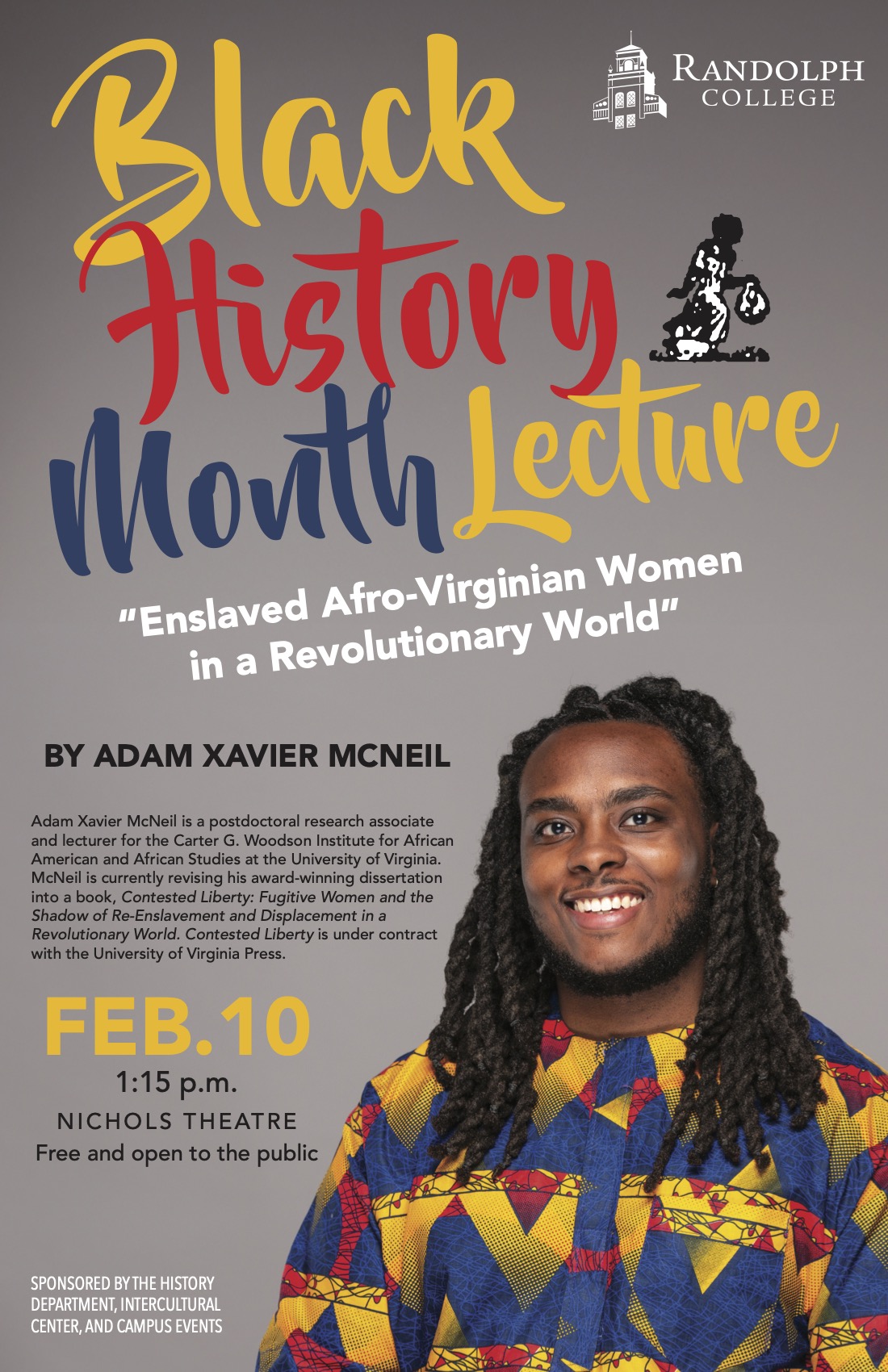
As part of my African American history class, I invited Dr. Adam McNeil to give a public lecture on his work about enslaved Afro-Virginian women during the Revolutionary War. It was a wonderful lecture and an honor to host him at Randolph. Special thanks to support from Randolph’s Campus Events Committee and the Intercultural Center for supporting the event.Here’s my introduction to Dr. McNeil’s talk:
_One hundred years ago – to the day – Americans were in the midst of celebrating the very first Black History Month, or as it was known then, “Negro History Week.” Designed by historian Dr. Carter G. Woodson, Negro History Week was created to help remedy the systematic erasure of Black Americans from American history. Dr. Woodson did not envision Negro History Week as the only time people should learn about Black history. Instead, he imagined it as an opportunity for schools to demonstrate what students had learned all year–it was a call for intentional remembering.
As Woodson envisioned it, Negro History Week was not an exercise in memorization or a box to be checked. He understood that how we remember the past has profound implications for the present. After all, 1926 was the height of Jim Crow segregation. Membership in the Ku Klux Klan was at an all-time high. Lynchings remained prevalent. Nativist and anti-immigrant rhetoric saturated public discourse. In Virginia, the General Assembly was passing racial integrity laws that banned interracial marriage, enforced the so-called “one-drop rule,” and mandated segregation in public spaces.
Dr. Woodson knew what he was doing when he created Negro History Week. He believed that knowing the truth could tear down the walls of segregation, hatred, racism, and white supremacy. “There would be no lynching if it did not start in the schoolroom,” Woodson declared.
Fifty years later, in 1976, Negro History Week evolved into Black History Month. And of course, 1976 was also the bicentennial, the year that Americans celebrated the 200th anniversary of the Declaration of Independence. So at precisely the moment Americans were asking themselves, “What is America? Who is American? And what does “liberty and justice for all” really mean?” At that moment, Woodson’s intellectual descendants were pushing to recommit the nation to remembering Black history.
This collision – of both the intentional remembering of Black history and the nation – is here with us today, too. 2026 is, after all, the 250th anniversary of the Declaration. And we are once again living in a time when the history of the Revolution and the founding era is being debated. Just weeks ago in Philadelphia, the National Park Service removed signage addressing the history of enslaved people held at the President’s House where George Washington lived while serving as the first President of the United States. History is never just about the past.
And so, in this 250th anniversary year of the Declaration of Independence and the 100th anniversary year of Black History Month, we have not just the opportunity but a duty to examine the experiences of Black Americans during the American Revolution. That is what makes today’s conversation so timely—and why I’m so excited to welcome our speaker today, a leading young scholar of African American history and the Revolution.
Adam Xavier McNeil is a Postdoctoral Research Associate and Lecturer in the Carter G. Woodson Institute for African American and African Studies at the University of Virginia. Dr. McNeil is currently revising his award-winning dissertation into a book, Contested Liberty: Fugitive Women and the Shadow of Re-Enslavement and Displacement in a Revolutionary World. Contested Liberty is under contract with the University of Virginia Press.
Please join me in giving a Wildcat Welcome to Dr. Adam McNeil._
29 Sep 2025
This fall I taught Queer American History. Every student in the class wanted to be there, wanted to do the readings, wanted to talk about what they were learning – it created a pretty magical learning environment!
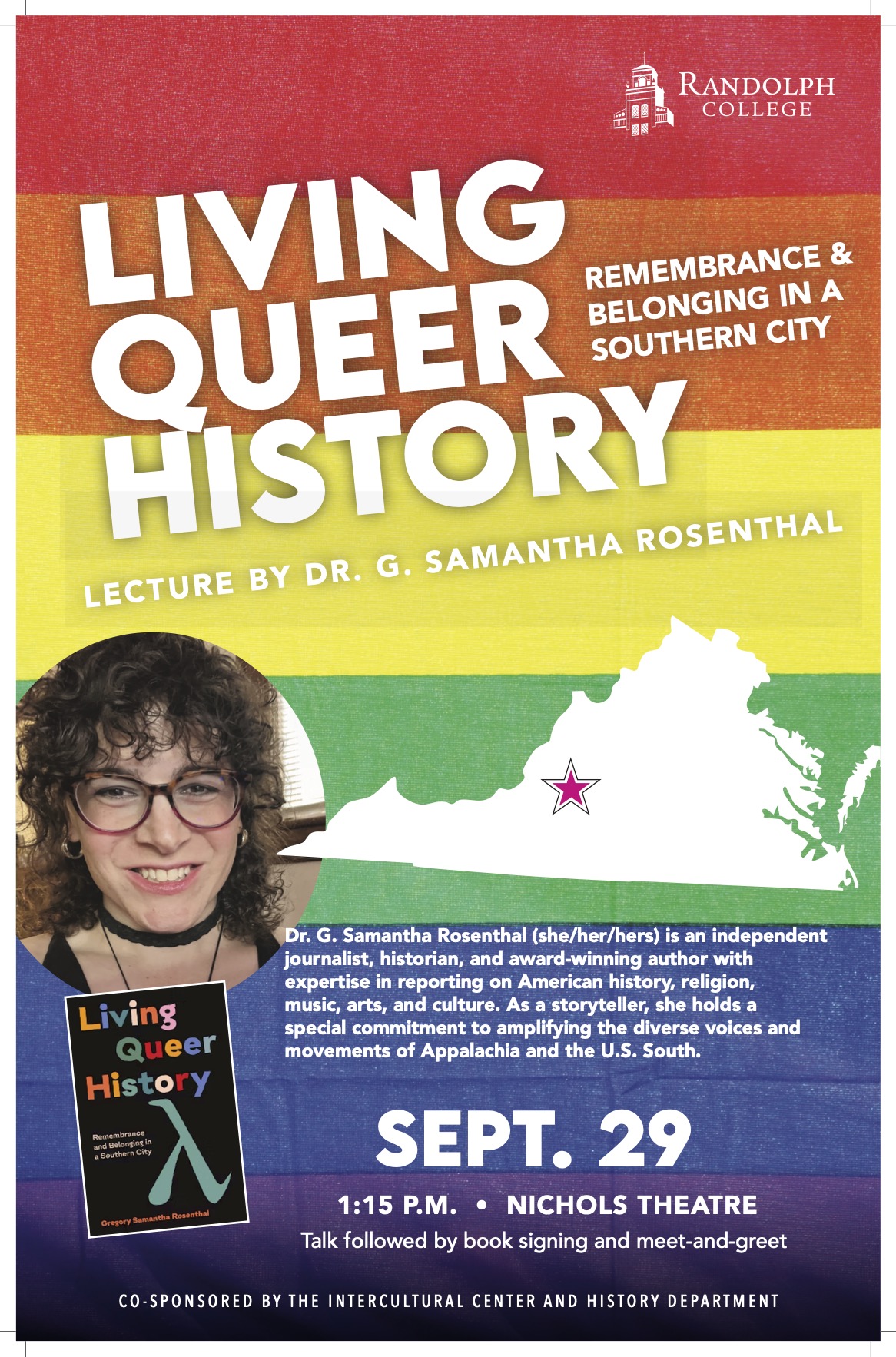
One of the high points was a guest lecture by Dr. Samantha Rosenthal. With the help of the History Department and the Intercultural Center, I invited Dr. Samantha Rosenthal to join us on campus to talk about her book, Living Queer History: Remembrance and Belonging in a Southern City, published by UNC Press in 2021. The talk was wonderful – several students wrote in their senior capstones that they found it inspirational. Follow her substack if you’re not already!
One of the greatest treats as a teacher is when students decide they want to do their senior capstone on something pertaining to what they learned in your class. This year, two of the seniors in my class told me they’re now planning to write on queer history! One is even using the oral histories and digitized archive created by the Southwest Virginia LGBTQ+ History Project that Dr. Rosenthal helped lead.
Huge thanks to Dr. Rosenthal and to Kathleen, David, and Gail who helped make this course so special!
18 Jul 2025
This past year, I received support from the Ruth Borker Fund for Women’s Studies to develop a new course on Queer History at Randolph College. Named in honor of a former Randolph professor, the Borker Fund supports faculty efforts to integrate “gender-related perspectives into the curriculum.”
When I first arrived at Randolph, I didn’t anticipate teaching Queer History. But over the past three years, I’ve become convinced that such a course is essential. While I wasn’t formally trained in queer theory or LGBTQ history, I am a social historian committed to centering the experiences of underrepresented groups. In that spirit, I’ve worked to incorporate LGBTQIA+ stories into all of my classes. The student response has been powerful. Many have described this as a “secret” history—one that resonates deeply with their lives and experiences. The need for this course has only grown more urgent amid the current wave of erasure of LGBTQ+ history.
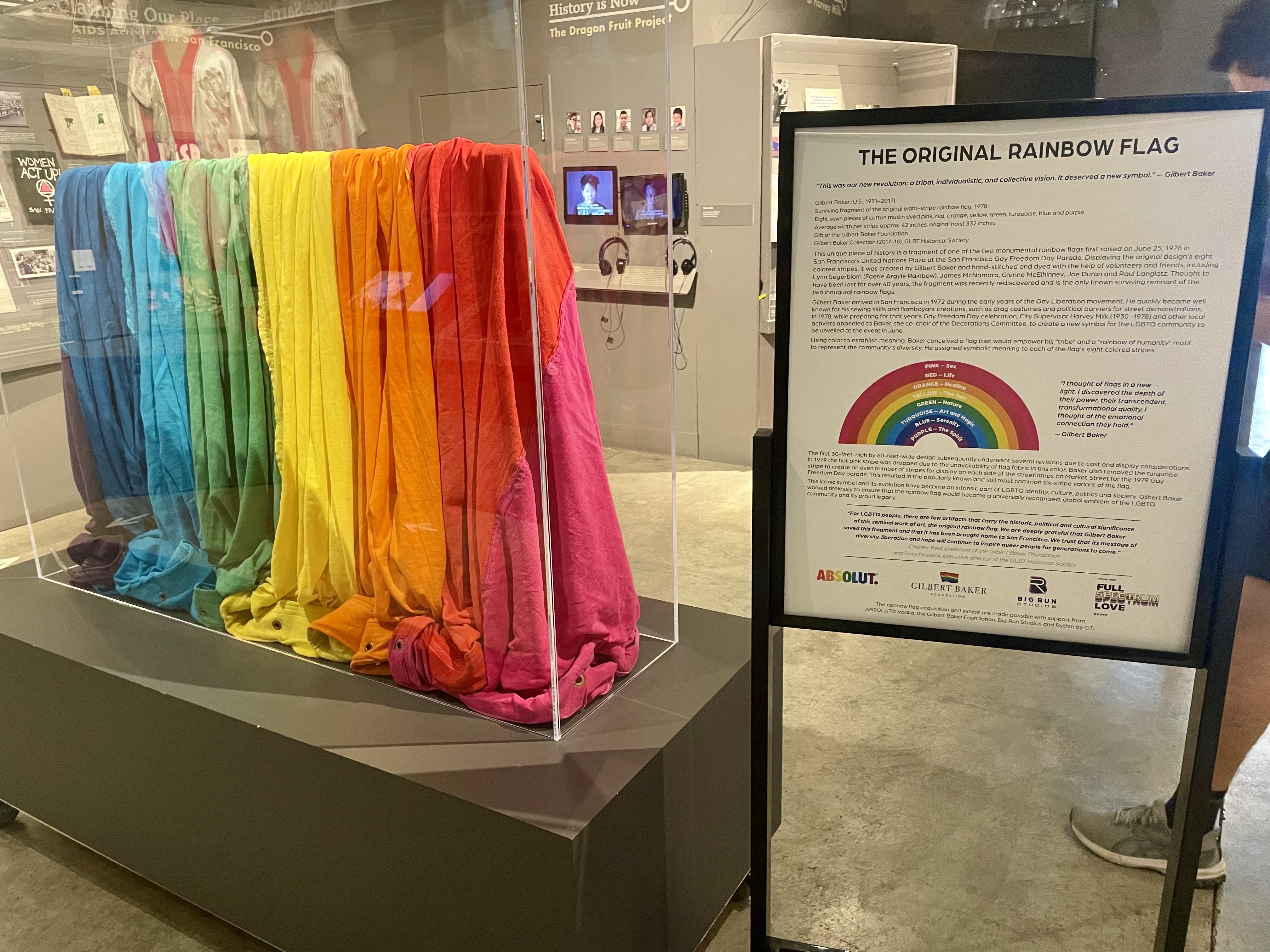
With support from the Borker Fund, I traveled to San Francisco this summer to visit key historical sites. The first day, I visited the Tenderloin neighborhood to check out the Tenderloin Museum, the former site of Compton’s Cafeteria, and Glide Memorial Church. I also traveled to Golden Gate Park to walk through the National AIDS Memorial Grove. I spent the next day in the Castro. I visited the GLBT Historical Society Museum — the first stand-alone LGBTQ history museum in the US - and joined an LGBTQ+ history walking tour. As part of the tour, I visited the Castro Camera, Harvey Milk Plaza, Pink Triangle Memorial, Castro Theatre, and the Rainbow Honor Walk. On my final day, I ferried over to Angel Island State Park, where I was reminded of Margot Canaday’s work on how the federal government policed sexual identity through immigration policy.
The trip helped me think more intentionally about how to frame particular units and introduced new sources and stories - such as the Compton’s Cafeteria Riot - that I plan to incorporate into the syllabus. I’m really looking forward to teaching the course this fall!
24 Apr 2025
Who gets to play—and who decides?
These two questions are at the heart of ongoing debates about women’s athletics, from the Olympics all the way to college campuses like Randolph.
Fortunately, for those who want to think critically about these questions, we have one of the foremost scholarly authorities right here in Lynchburg.
I was reminded of this last summer while listening to the podcast Tested, produced by the CBC and NPR, in the lead up to the Summer Olympics in Paris. While listening, I heard a familiar voice – that of Dr. Lindsay Parks Pieper.
I found this very exciting because I knew Dr. Pieper personally – we’d met playing pickleball. She’s tall and a former college athlete… so I’ll casually avoid telling you who usually won.
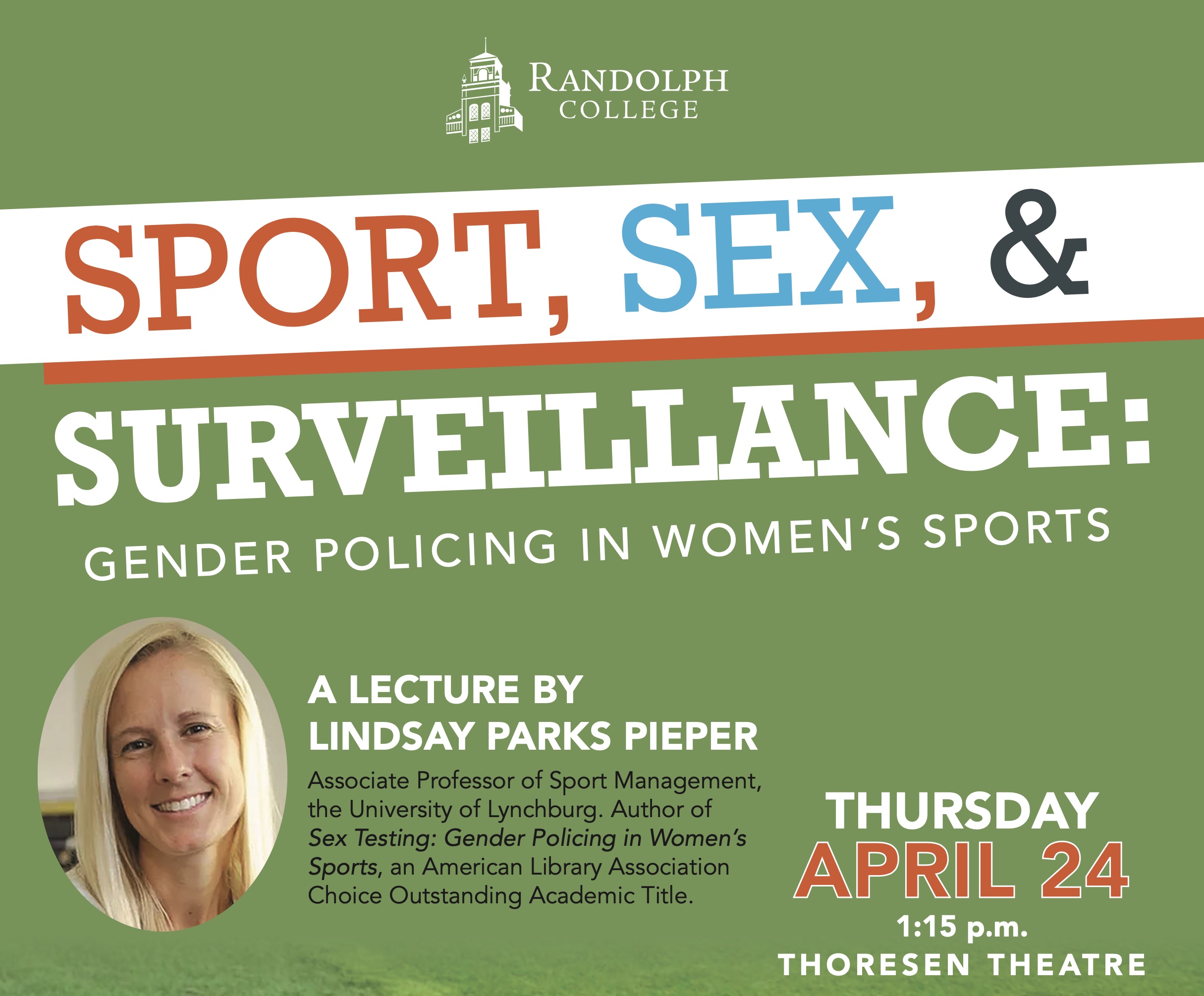
As I listened, I became increasingly convinced that we needed to invite Dr. Pieper to campus. I initially invited her to speak with my American Women’s History class, but word spread—and her visit turned into a campus-wide event. In the end, about 75 Wildcats showed up for her talk.
Lindsay Pieper is the Associate Professor of Health Sciences & Human Performance and the Chair of the Sport Management Department at the University of Lynchburg. She graduated with her BA from Virginia Tech and later received her Masters and Doctorate from The Ohio State University.
Her book, Sex Testing: Gender Policing in Women’s Sport, was published by the University of Illinois Press in 2016. It won several awards including the North American Society for Sport Sociology’s Outstanding Book of the Year, the North American Society for Sport History’s Distinguished Title award, and it was listed as an Outstanding Academic Title by the American Library Association.
Her talk, “Sport, Sex, and Surveillance: Gender Policing in Women’s Sports,” was timely, thought-provoking, and a resounding success.